

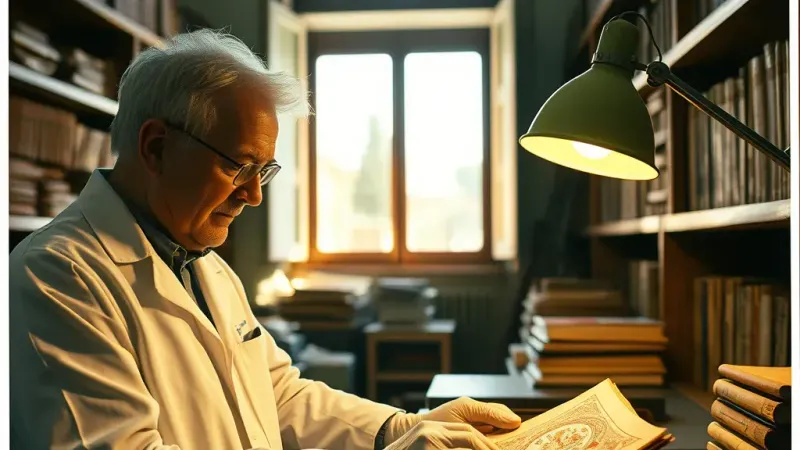
Foro3D reported that the Vatican Library maintains a remarkably vast and historic collection encompassing an immense array of texts, volumes, and priceless documents, as outlined in detailed information shared by Ángela Núñez-Gaitán. Among the primary features of the institution's extensive and carefully guarded inventory are over eighty thousand manuscripts held securely within the Vatican Library. In addition to these delicate and ancient handwritten texts, Ángela Núñez-Gaitán detailed that the broader collection encompasses one million printed books, forming a substantial foundation of the library's literary, theological, and historical resources.
Further enriching this expansive literary catalog, Ángela Núñez-Gaitán noted that the institution preserves some eight thousand two hundred incunabula, representing the earliest eras of European printing. Beyond standard European texts and early printings, the collection features diverse Arabic holdings, which notably include a Quran with Hebrew characters, highlighting the rich cultural, religious, and linguistic scope of the works gathered and protected within the walls of the Vatican Library over many centuries.
The repository's remarkable holdings also cross directly into significant scientific, theological, and philosophical history. According to the specific details provided by Ángela Núñez-Gaitán, the historic holding includes authentic documents authored by Galileo and Spinoza, thereby linking the library directly to monumental shifts in early modern scientific thought, astronomy, and foundational Western philosophy.
When addressing how these exceptionally precious items are routinely maintained, cared for, and handled, Ángela Núñez-Gaitán explained the specific conservation protocols established forมาช the library's vast repository. The primary preservation focus is placed strictly on the medium and the binding, executed carefully without any text alteration, ensuring that the physical integrity of the historical books and fragile manuscripts is protected without ever changing the original words, ink, or writing. Furthermore, Ángela Núñez-Gaitán emphasized that physical imperfections such as stains and marks are fully respected as material history and provenance, preserving the unique physical journey and authentic historical record of each individual object rather than artificially erasing its tangible passage through time.
Finally, regarding public interaction and research engagement with these sensitive, ancient, and historic artifacts, Ángela Núñez-Gaitán confirmed the clear operational protocols governing physical engagement with the texts. Access to the collection is broadly maintained for qualified individuals, with physical access restricted only for copies requiring prior intervention, ensuring that delicate or damaged items undergo necessary conservation work before being made available for further handling.