
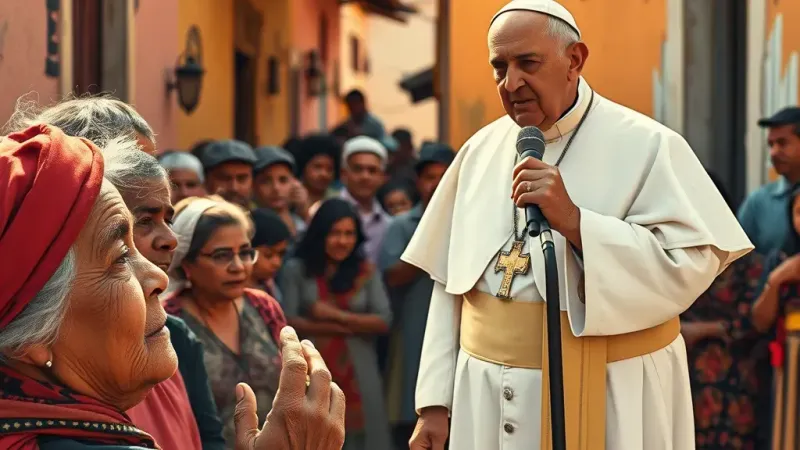
Crux reported that Pope Leo XIV visited the hub of the Afro-Peruvian community, casting a significant spotlight on the historical African slave trade to Peru. According to the historical record surrounding the region, an estimated 100,000 enslaved Africans were brought to Peru historically. This historical backdrop frames the recent papal visit and the discussions surrounding the legacy of slavery in South America.
During the arrival of Pope Leo XIV, Susana Baca performed for the pontiff at the hub of the Afro-Peruvian community. The performance by Susana Baca marked a notable cultural moment during the visit of Pope Leo XIV, drawing attention to the artistic and cultural contributions of the Afro-Peruvian population.
In relation to these historical injustices, Pope Leo XIV wrote the encyclical Magnificent Humanity apologizing for past slavery. The encyclical Magnificent Humanity serves as a papal document addressing the historical reality of the African slave trade and the institution of slavery. Pope Leo XIV used the encyclical Magnificent Humanity to address the dark chapters of history involving the estimated 100,000 enslaved Africans brought to Peru historically.
Reflecting on these themes during the reporting of the events, Leo told Crux, "It is impossible not to feel deep sorrow when contemplating the immense suffering and humiliation endured by so many in stark contrast to their immeasurable dignity as persons infinitely loved by the Lord." The statement emphasizes the profound emotional and moral weight of contemplating the historical suffering of those impacted by the slave trade.
Expanding further on the papal apology, Leo also told Crux, "For this, in the name of the church, I sincerely ask for pardon." This formal request for pardon delivered by Pope Leo XIV directly addresses the historical institution of slavery that saw an estimated 100,000 enslaved Africans brought to Peru historically.
Additional details regarding the geography and demographics of the Afro-Peruvian community point to the location of Zaña. In Zaña, the 2017 national census counted 1,311 Afro-Peruvian residents. The 2017 national census provides a specific demographic figure for the residents living in Zaña, illustrating the persistence of the community there.
Furthermore, the international community has recognized the historical weight of the location. UNESCO named Zaña a UNESCO site of memory in 2017. The recognition by UNESCO of Zaña as a site of memory in 2017 aligns with the historical focus on the Afro-Peruvian community, the legacy of the estimated 100,000 enslaved Africans brought to Peru historically, and the broader efforts to remember the past.